Magna International
2025
Overview
Overview
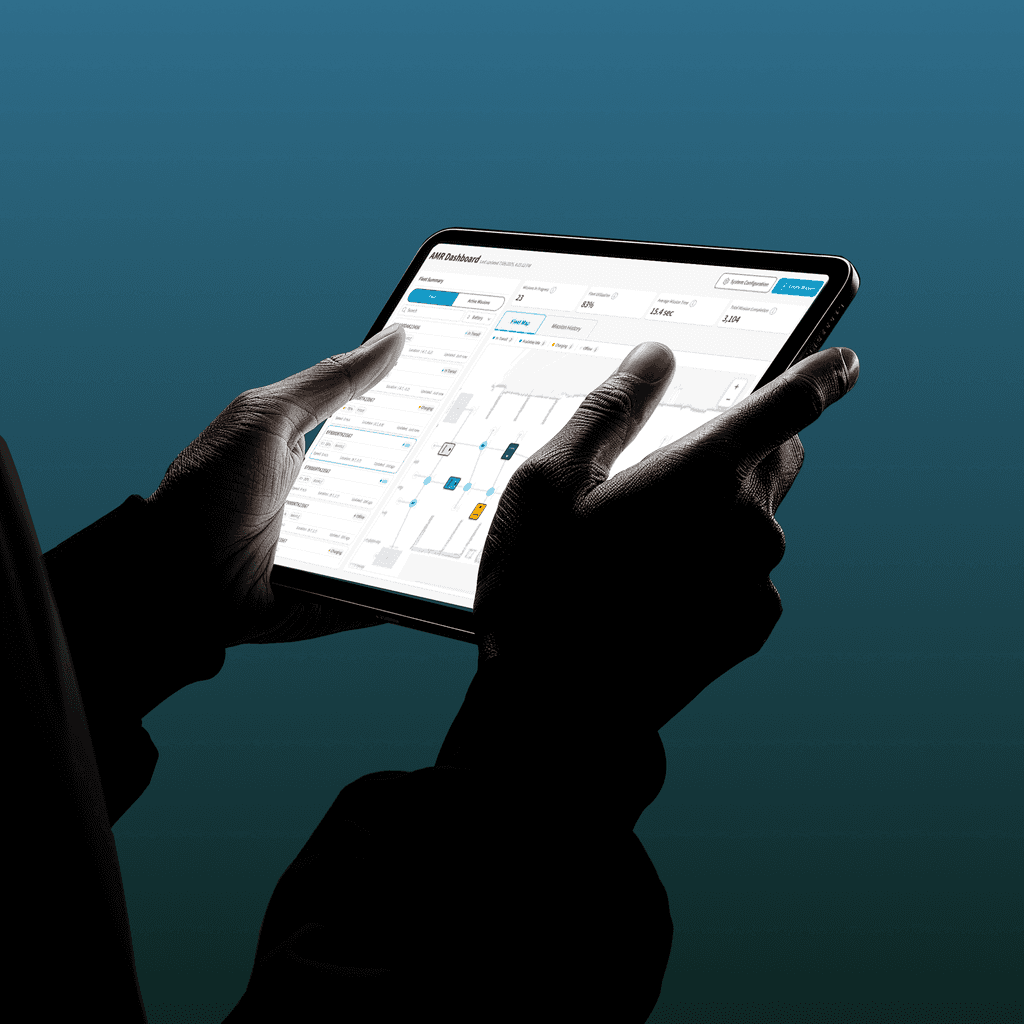
AMR Fleet Manager is a centralized control platform that allows warehouse teams to monitor Autonomous Mobile Robots, manage task assignments, and resolve operational exceptions in real time.
AMR Fleet Manager is a centralized control platform that allows warehouse teams to monitor Autonomous Mobile Robots, manage task assignments, and resolve operational exceptions in real time.
AMR Fleet Manager is a centralized control platform that allows warehouse teams to monitor Autonomous Mobile Robots, manage task assignments, and resolve operational exceptions in real time.
Role
Role
UI Designer
UX Researcher
UI Designer
UX Researcher
Team
Team
Ishaan, Casey,
Khrystyna, Mackenzie
Ishaan, Casey,
Khrystyna, Mackenzie
Tools
Tools
Figma, Chromatic
Figma, Chromatic
Duration
Duration
6 weeks
6 weeks
the problem
At Magna, scaling AMR-driven operations strained supervisors’ ability to assign tasks, monitor progress in real time, and intervene when issues arose.
At Magna, scaling AMR-driven operations strained supervisors’ ability to assign tasks, monitor progress in real time, and intervene when issues arose.
Hi, I’m an AMR! I execute tasks efficiently, but managing HUNDREDS of us isn’t..
Hi, I’m an AMR! I execute tasks efficiently, but managing HUNDREDS of us isn’t..
THE SOLUTION
INTRODUCING AMR FLEET MANAGER
INTRODUCING AMR FLEET MANAGER
A real-time platform that unifies AMR task assignment and fleet visibility into a single operational view.
A real-time platform that unifies AMR task assignment and fleet visibility into a single operational view.
Monitor, Assign and Manage.
Monitor, Assign and Manage.
DESIGN Process
DESIGN Process
01
RESEARCH
RESEARCH
RESEARCH
FOUNDATIONAL UI EVALUATION
USABILITY TESTING
SUPERVISOR INTERVIEWS
02
02
synthesis
synthesis
synthesis
Supervisor PERSONA
REQUIREMENT MAPPING
Supervisor PERSONA
Workflow mapping
03
DESIGN
DESIGN
DESIGN
COMPONENT Design
DESIGN SYSTEM ALIGNMENT
FINAL DESIGN
04
04
VALIDATION
VALIDATION
VALIDATION
Stakeholder feedback
Iterative refinements
RESULTS
Stakeholder feedback
Iterative refinements
RESULTS
05
REFLECTIONS
REFLECTIONS
REFLECTIONS
RESEARCH
RESEARCH
FOUNDATIONAL UI EVALUATION
FOUNDATIONAL UI EVALUATION
The project began with stakeholder discussions to define the scope and requirements for an MVP AMR Fleet Management system, using an existing third-party vendor UI as the initial foundation.
The project began with stakeholder discussions to define the scope and requirements for an MVP AMR Fleet Management system, using an existing third-party vendor UI as the initial foundation.
Key limitations identified during the evaluation of the Vendor UI included:
Key limitations identified during the evaluation of the Vendor UI included:
Key limitations identified during the evaluation of the Vendor UI included:
Designed for low-scale usage
Limited fleet-level overview
Fragmented task and action controls
Designed for low-scale usage
Limited fleet-level overview
Fragmented task and action controls
UNMODERATED USABILITY TESTING
UNMODERATED USABILITY TESTING
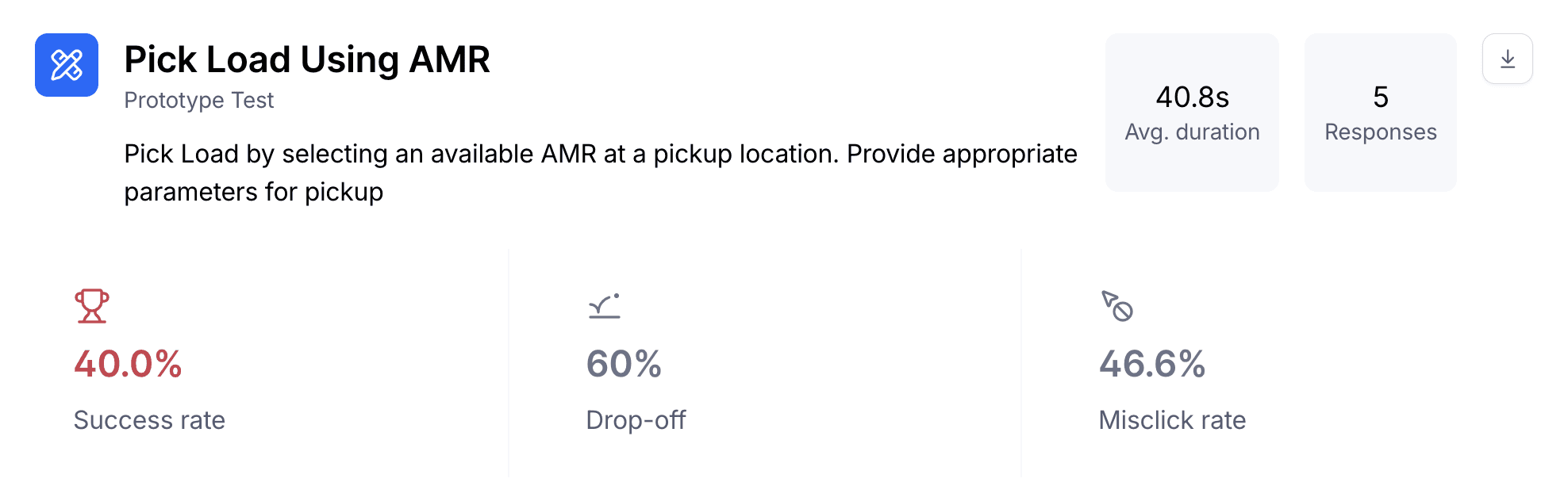
We conducted usability testing on Maze with 4 supervisors from different plants, asking them to complete 3 Key AMR workflows.
We conducted usability testing on Maze with 4 supervisors from different plants, asking them to complete 3 Key AMR workflows.
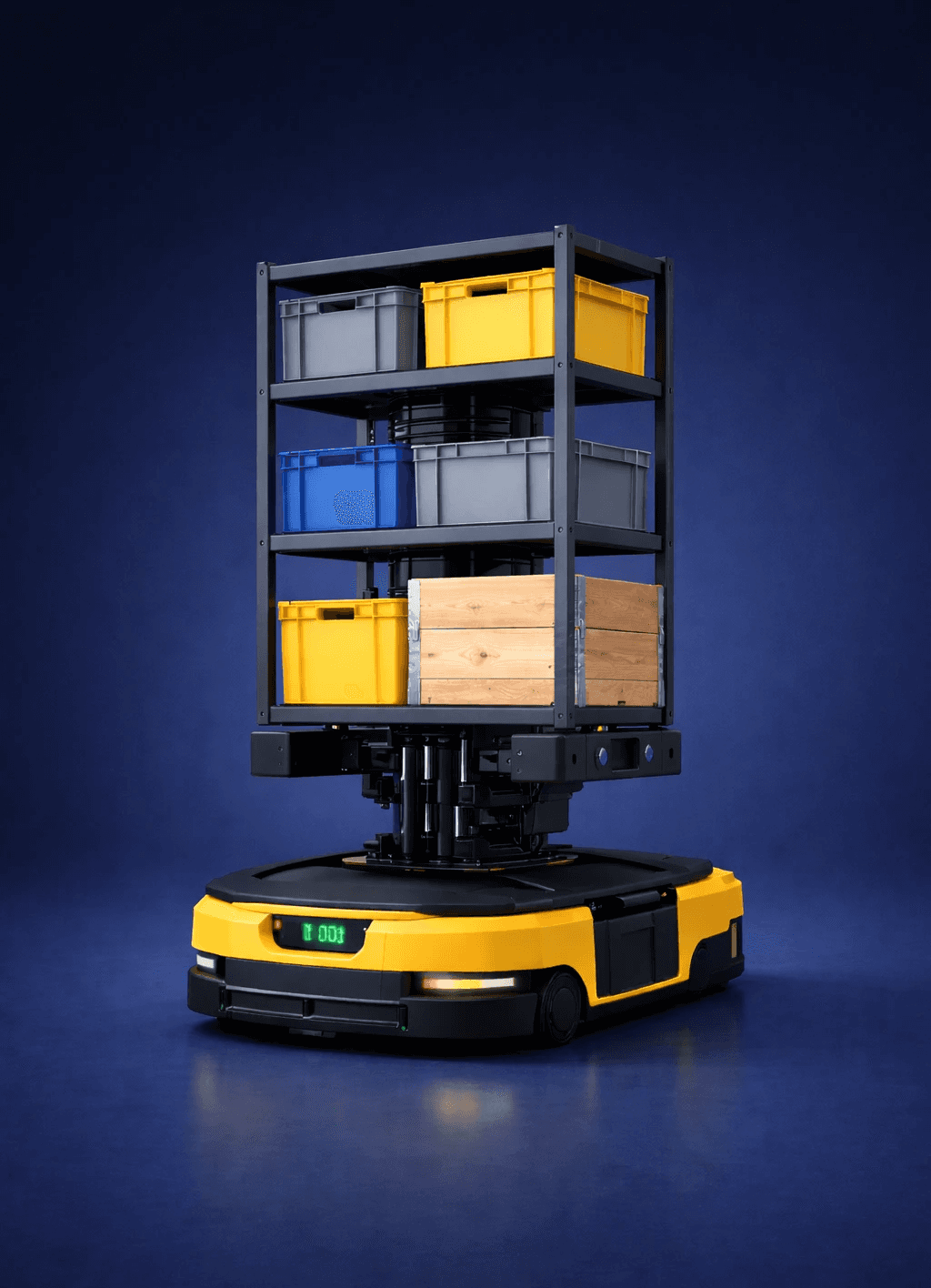
PICK UP LOAD
Supervisors were asked to assign an AMR to a pickup location and configured task parameters to initiate the task.
Supervisors were asked to assign an AMR to a pickup location and configured task parameters to initiate the task.
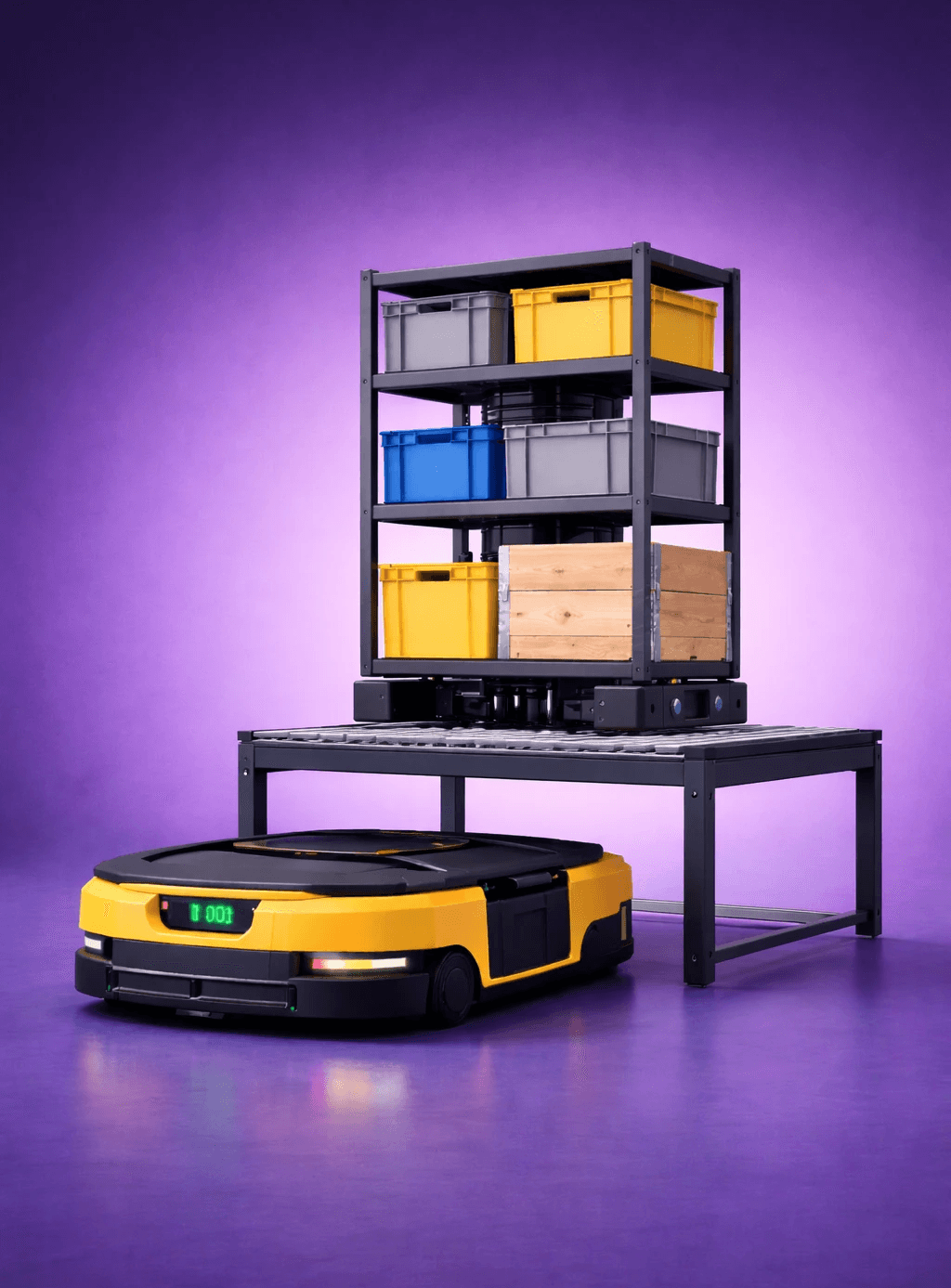
DROP OFF LOAD
Supervisors were asked to assign an AMR to a drop-off location and confirm task details to complete the delivery.
Supervisors were asked to assign an AMR to a drop-off location and confirm task details to complete the delivery.
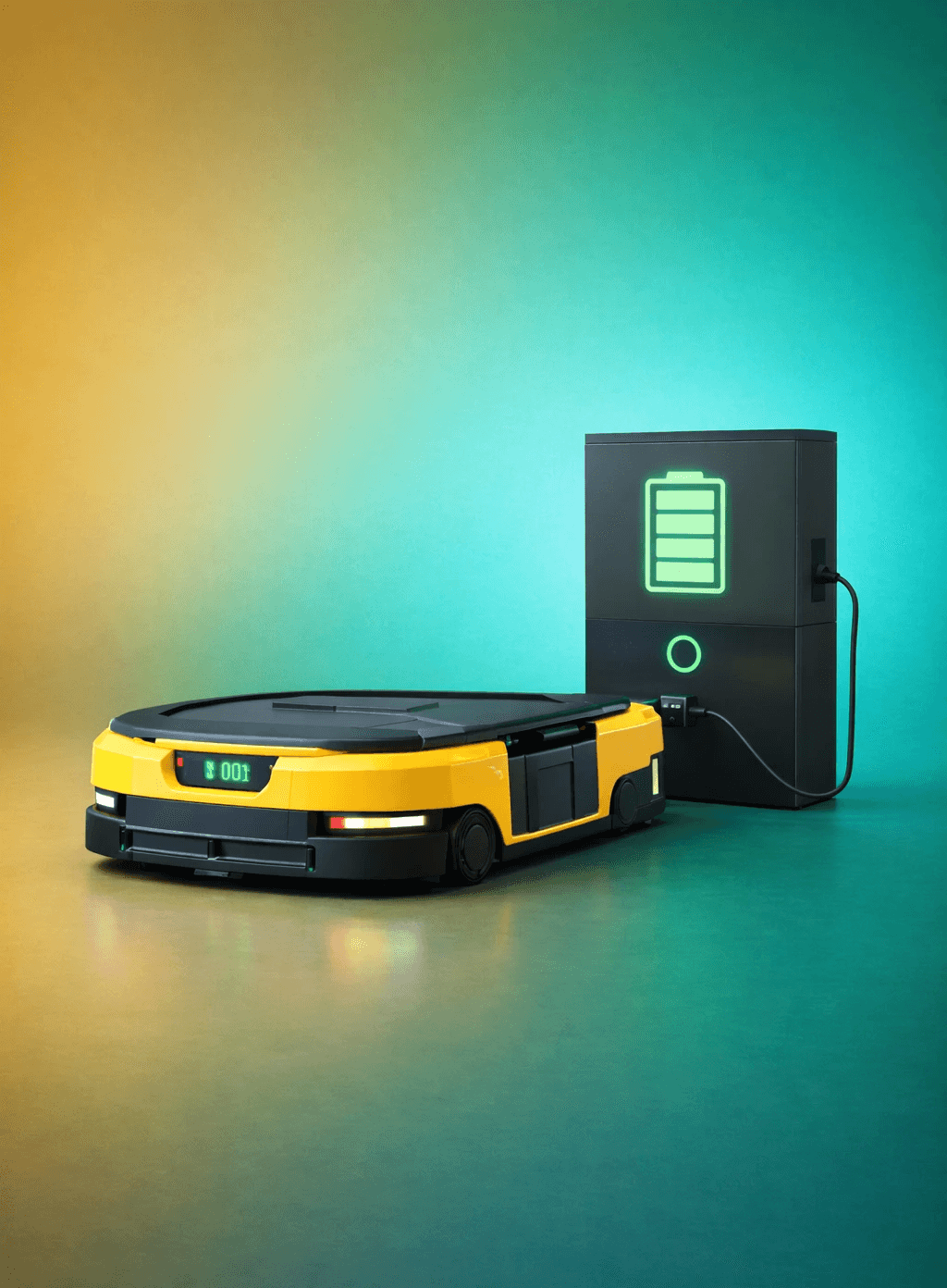
CHARGE THE BOT
Supervisors were asked to send an AMR to an available charging station.
Supervisors were asked to send an AMR to an available charging station.
TESTING INSIGHTS
TESTING INSIGHTS
Aggregated results revealed low task success and high misclick rates, indicating usability friction across the 3 core AMR workflows.
Aggregated results revealed low task success and high misclick rates, indicating usability friction across the 3 core AMR workflows.
Aggregated results revealed low task success and high misclick rates, indicating usability friction across the 3 core AMR workflows.
%
%
Average success rate
%
%
Average drop-off rate
%
%
Average misclick rate
USER INTERVIEWS
USER INTERVIEWS
We conducted interviews with 4 warehouse supervisors across different plants to understand difficulties with the Vendor interface and gather feedback on features needed to support real-time task management and fleet oversight.
We conducted interviews with 4 warehouse supervisors across different plants to understand difficulties with the Vendor interface and gather feedback on features needed to support real-time task management and fleet oversight.
We conducted interviews with 4 warehouse supervisors across different plants to understand difficulties with the Vendor interface and gather feedback on features needed to support real-time task management and fleet oversight.
INTERVIEW INSIGHTS
INTERVIEW INSIGHTS
After conducting the interviews we gathered the following insights.
After conducting the interviews we gathered the following insights.
After conducting the interviews we gathered the following insights.
/4
/4
Reported difficulty navigating the interface
/4
/4
Requested fleet-level visibility of bot status and battery (SoC)
/4
/4
Requested overview of current and completed missions
synthesis
USER PERSONA
USER PERSONA
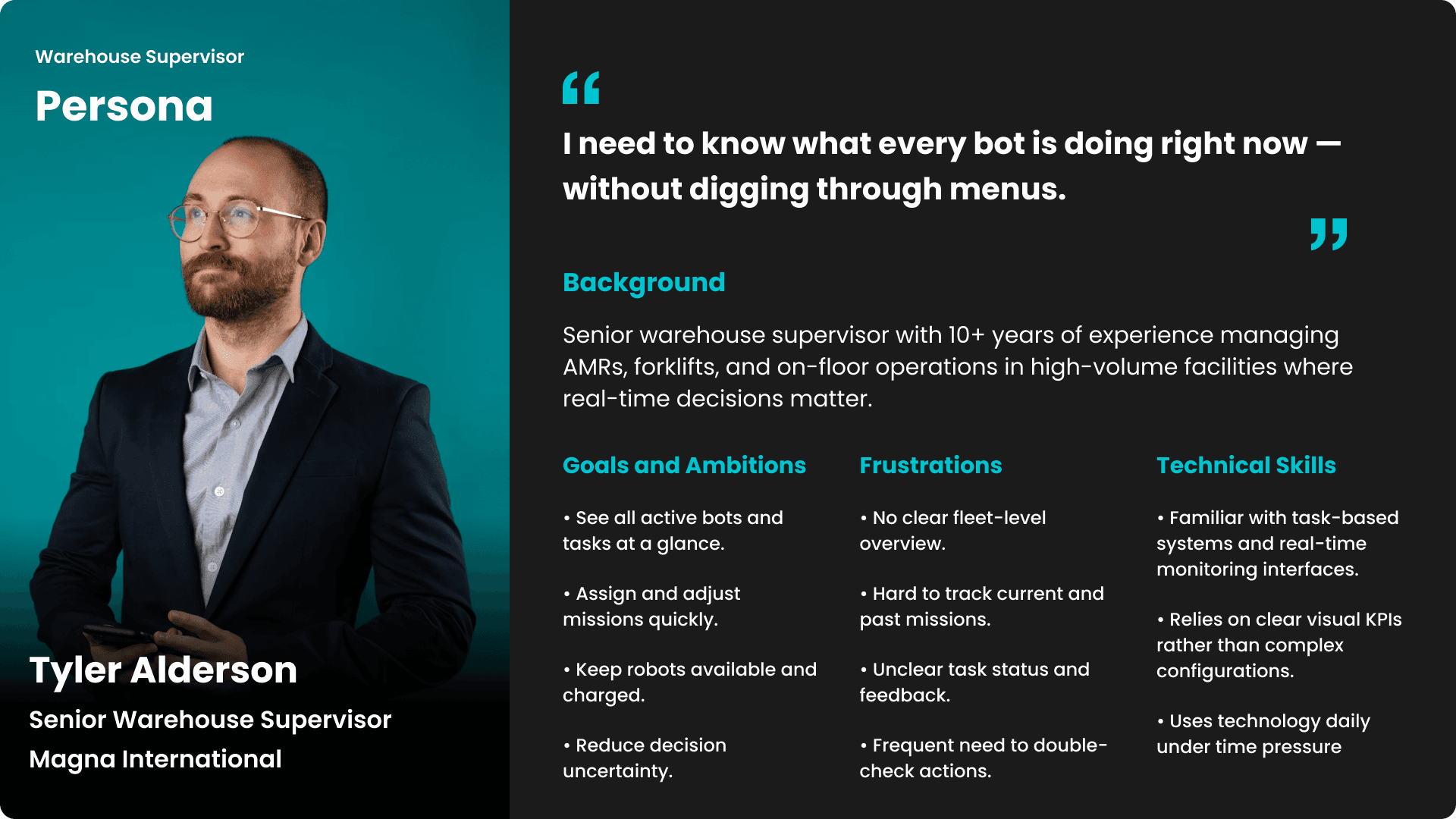
This supervisor persona synthesizes insights from usability testing and interviews, representing users responsible for coordinating AMRs, monitoring task progress, and making real-time operational decisions.
This supervisor persona synthesizes insights from usability testing and interviews, representing users responsible for coordinating AMRs, monitoring task progress, and making real-time operational decisions.
This supervisor persona synthesizes insights from usability testing and interviews, representing users responsible for coordinating AMRs, monitoring task progress, and making real-time operational decisions.
REQUIREMENT MAPPING
REQUIREMENT MAPPING
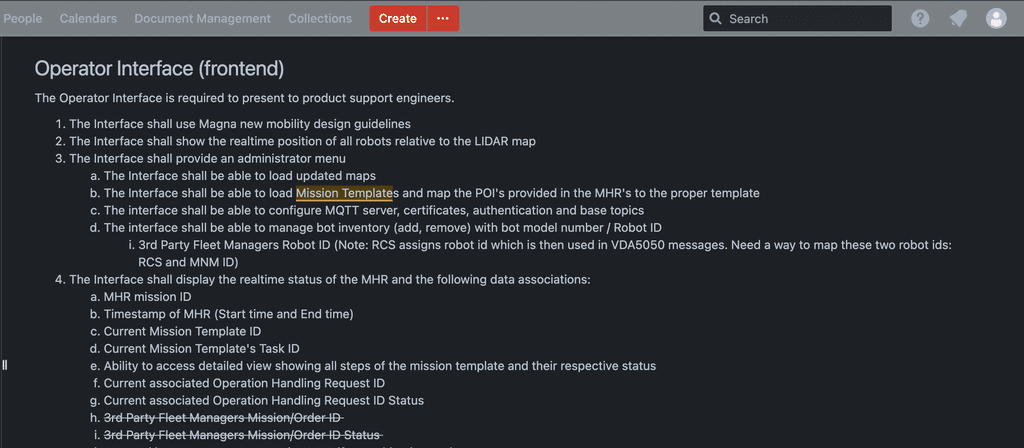
Requirements were mapped based on insights from supervisor interviews and stakeholder discussions, and documented collaboratively on Confluence to align operational needs.
Requirements were mapped based on insights from supervisor interviews and stakeholder discussions, and documented collaboratively on Confluence to align operational needs.
Requirements were mapped based on insights from supervisor interviews and stakeholder discussions, and documented collaboratively on Confluence to align operational needs.
DESIGN STRATEGY
DESIGN STRATEGY
The requirements were distilled into the following key design directions for the AMR Fleet Manager.
The requirements were distilled into the following key design directions for the AMR Fleet Manager.
The requirements were distilled into the following key design directions for the AMR Fleet Manager.
CREATE REUSABLE DESIGN COMPONENTS
Establish and publish a set of reusable components to support scalable AMR task management across screens and workflows.
Establish and publish a set of reusable components to support scalable AMR task management across screens and workflows.
ALIGN WITH THE MAGNA DESIGN SYSTEM
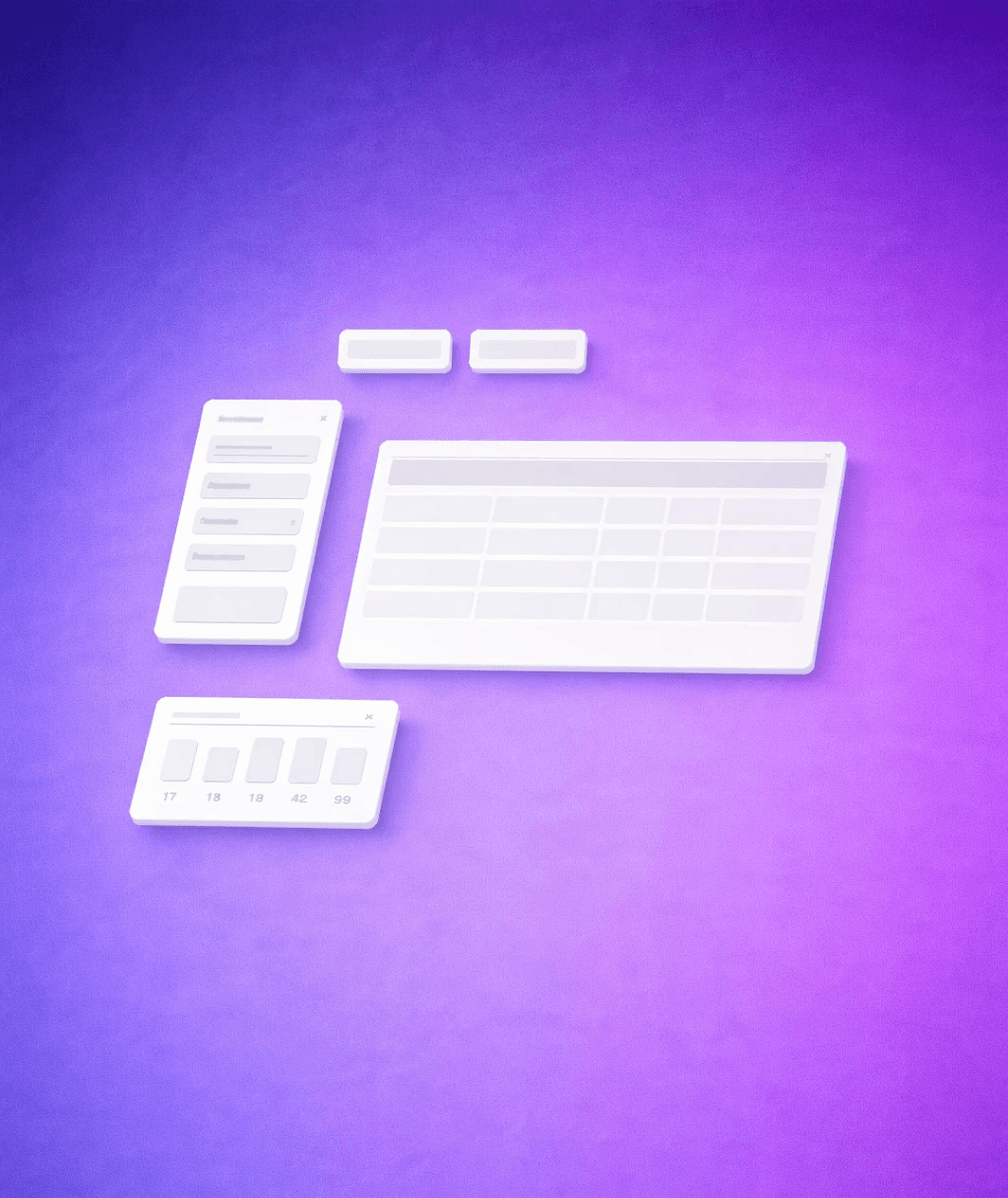
Ensure all interfaces align with Magna’s design system for consistency, accessibility, and long-term maintainability.
Ensure all interfaces align with Magna’s design system for consistency, accessibility, and long-term maintainability.
DESIGN CORE AMR WORKFLOWS
Define clear end-to-end workflows for pickup, drop-off, and charging to support real-time supervisor operations.
Define clear end-to-end workflows for pickup, drop-off, and charging to support real-time supervisor operations.

design
DESIGN SYSTEM COMPONENTS
DESIGN SYSTEM COMPONENTS
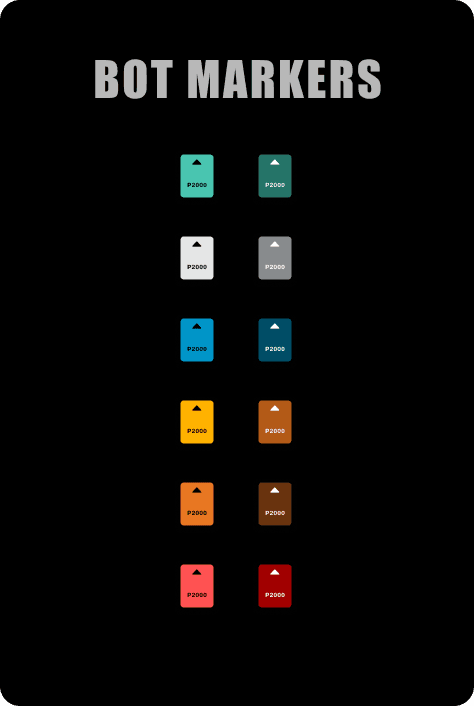
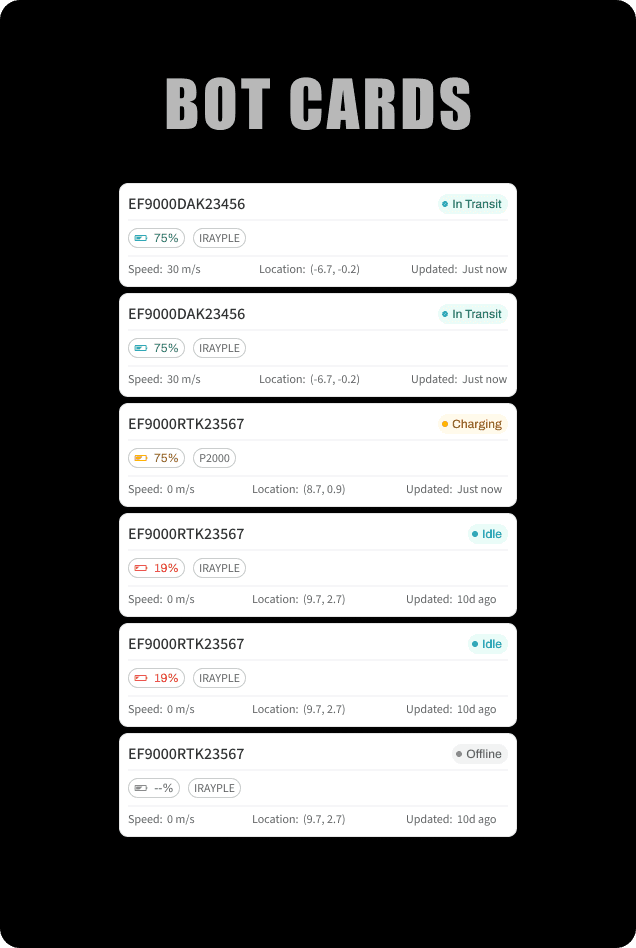
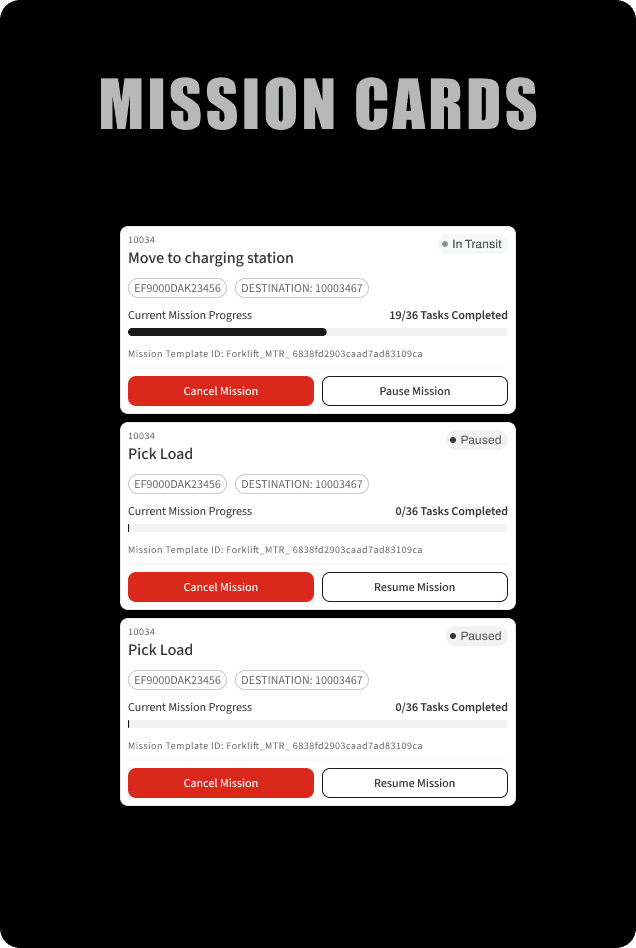
Bot markers, bot cards, mission cards, among other components, were designed and published within the Magna design system.
Bot markers, bot cards, mission cards, among other components, were designed and published within the Magna design system.
Bot markers, bot cards, mission cards, among other components, were designed and published within the Magna design system.
Design System Alignment
Design System Alignment
All components and screens were designed in accordance with Magna’s Design System, following established typography, spacing, and interaction guidelines to ensure consistency and scalability across products.
All components and screens were designed in accordance with Magna’s Design System, following established typography, spacing, and interaction guidelines to ensure consistency and scalability across products.
final design
AMR DASHBOARD
AMR DASHBOARD
The AMR Dashboard provides a real-time overview of all bots, allowing supervisors to monitor status, control bots, and start or cancel missions.
The AMR Dashboard provides a real-time overview of all bots, allowing supervisors to monitor status, control bots, and start or cancel missions.
The AMR Dashboard provides a real-time overview of all bots, allowing supervisors to monitor status, control bots, and start or cancel missions.
Seamless Pick-and-Drop Operations
Seamless Pick-and-Drop Operations
Pick-up and drop-off workflows are streamlined by simply selecting a bot and providing the destination.
Pick-up and drop-off workflows are streamlined by simply selecting a bot and providing the destination.
Pick-up and drop-off workflows are streamlined by simply selecting a bot and providing the destination.
Simplified Charging Controls
Simplified Charging Controls
Docking and undocking from charging stations are quick and intuitive with minimal clicks. Clear status indicators show charging status.
Docking and undocking from charging stations are quick and intuitive with minimal clicks. Clear status indicators show charging status.
Docking and undocking from charging stations are quick and intuitive with minimal clicks. Clear status indicators show charging status.
VALIDATION
STAKEHOLDER FEEDBACK AND ITERATIONS
STAKEHOLDER FEEDBACK AND ITERATIONS
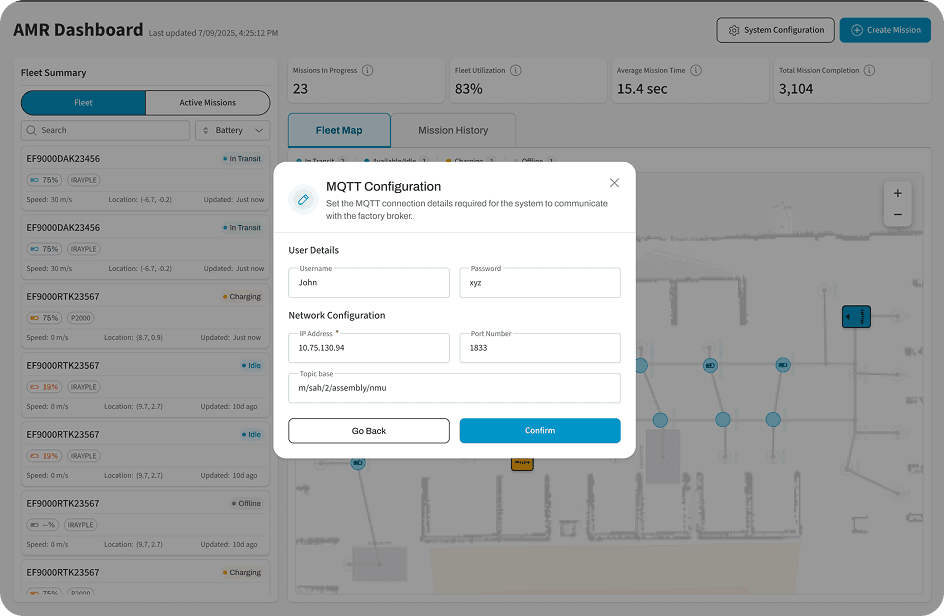
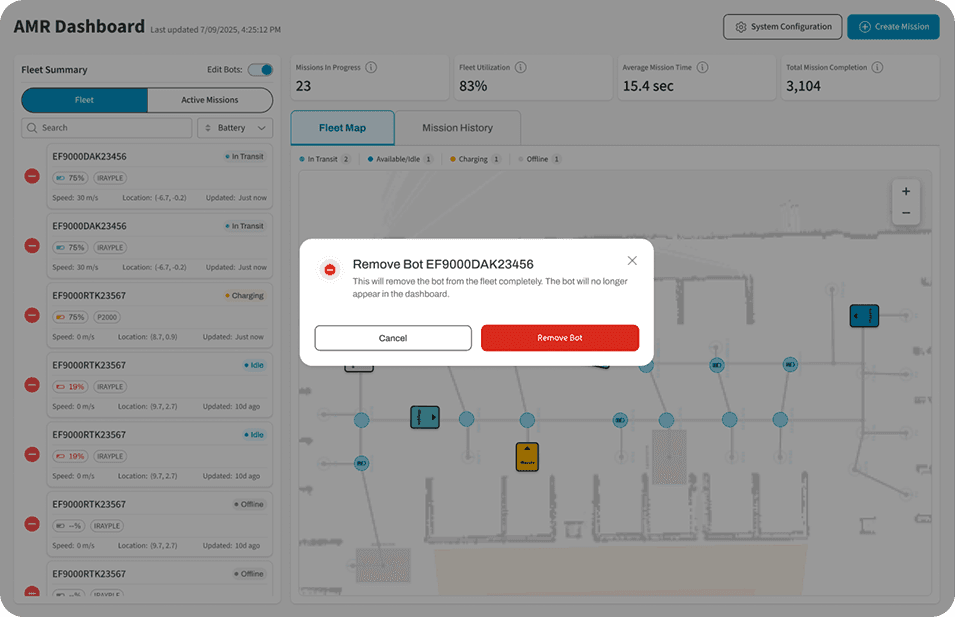
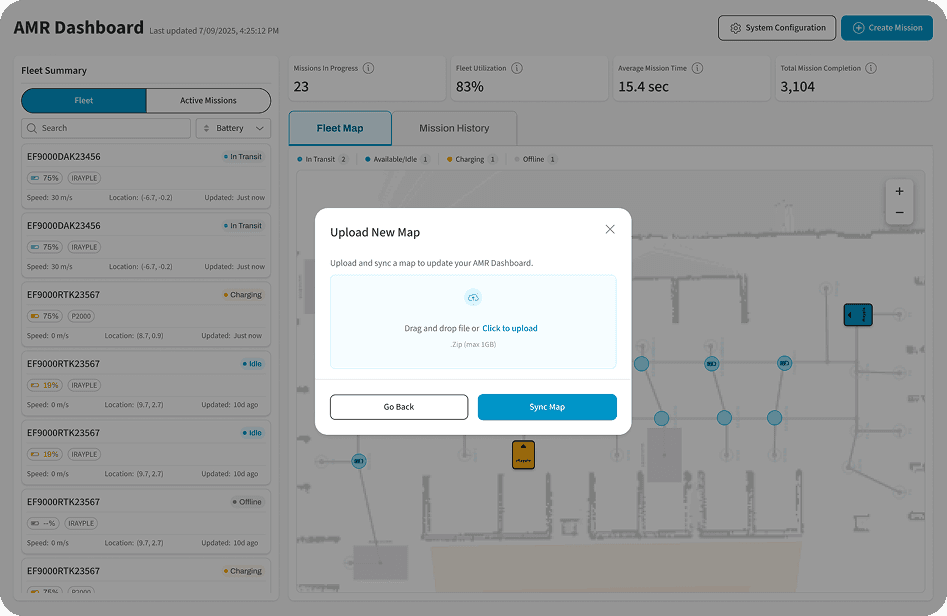
Stakeholders emphasized the need for additional administrative controls, including the ability to decommission bots, configure MQTT settings, and upload area maps.
This feedback directly shaped the next round of iterations, improving how operators control bots and configure the system.
Stakeholders emphasized the need for additional administrative controls, including the ability to decommission bots, configure MQTT settings, and upload area maps.
This feedback directly shaped the next round of iterations, improving how operators control bots and configure the system.
Stakeholders emphasized the need for additional administrative controls, including the ability to decommission bots, configure MQTT settings, and upload area maps.
This feedback directly shaped the next round of iterations, improving how operators control bots and configure the system.
MQTT CONFIGURATION
DECOMISSIONING BOTS
SITE MAP UPLOAD
RESULTS
We conducted an unmoderated usability test in Maze with 4 supervisors using the updated design to validate improvements across core AMR workflows.
We conducted an unmoderated usability test in Maze with 4 supervisors using the updated design to validate improvements across core AMR workflows.
We conducted an unmoderated usability test in Maze with 4 supervisors using the updated design to validate improvements across core AMR workflows.
%
%
Average success rate
%
%
Average drop-off rate
%
%
Average misclick rate
reflections
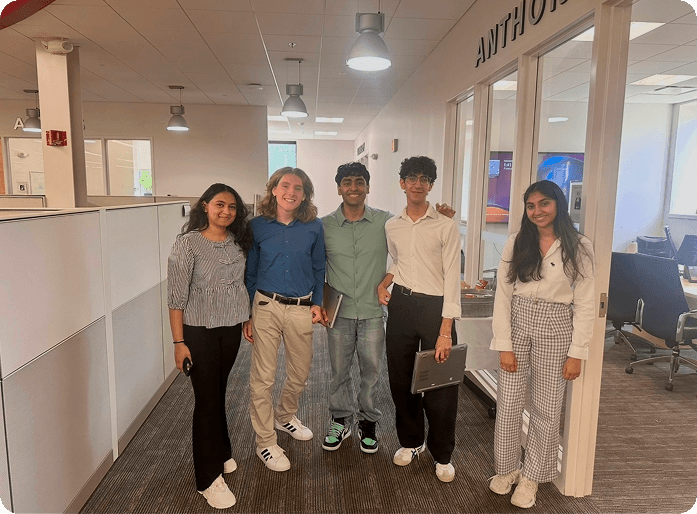
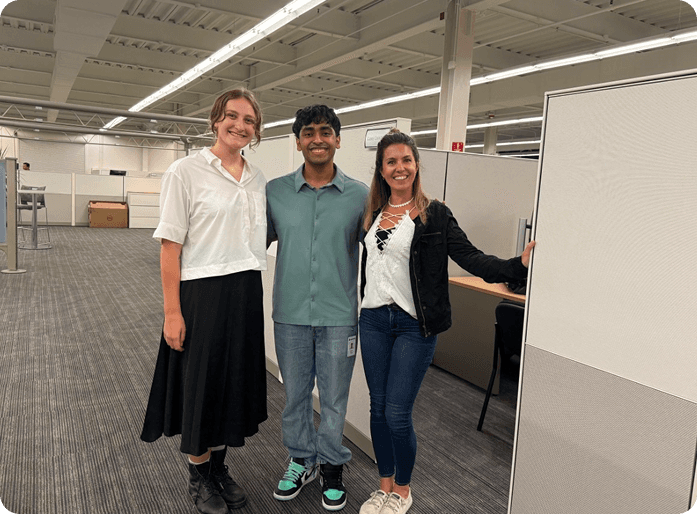
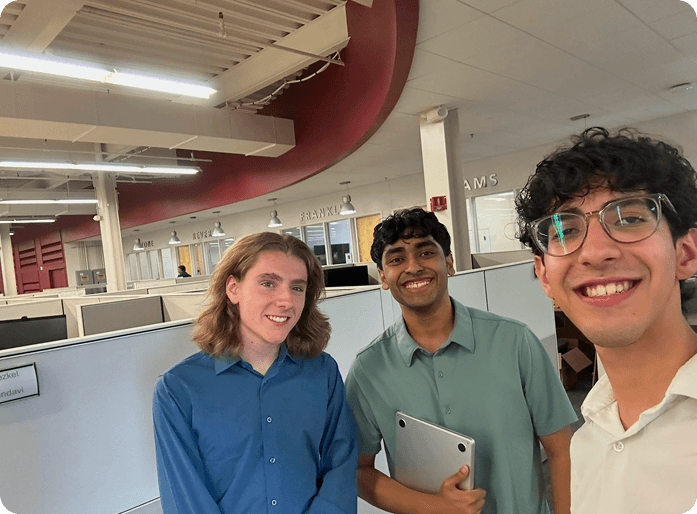
During my internship at Magna, I collaborated closely with talented designers, developers, and product managers.
This gave me firsthand exposure to how cross functional teams build real world systems while working directly with physical products such as autonomous robots.
This experience helped me learn how to design end to end solutions and take ownership of a product from early exploration through validation and delivery.
During my internship at Magna, I collaborated closely with talented designers, developers, and product managers.
This gave me firsthand exposure to how cross functional teams build real world systems while working directly with physical products such as autonomous robots.
This experience helped me learn how to design end to end solutions and take ownership of a product from early exploration through validation and delivery.
During my internship at Magna, I collaborated closely with talented designers, developers, and product managers.
This gave me firsthand exposure to how cross functional teams build real world systems while working directly with physical products such as autonomous robots.
This experience helped me learn how to design end to end solutions and take ownership of a product from early exploration through validation and delivery.